
Trapped Inside Delaney Hall
One man’s account of mistreatment, neglect, and coercion inside the notorious ICE detention center

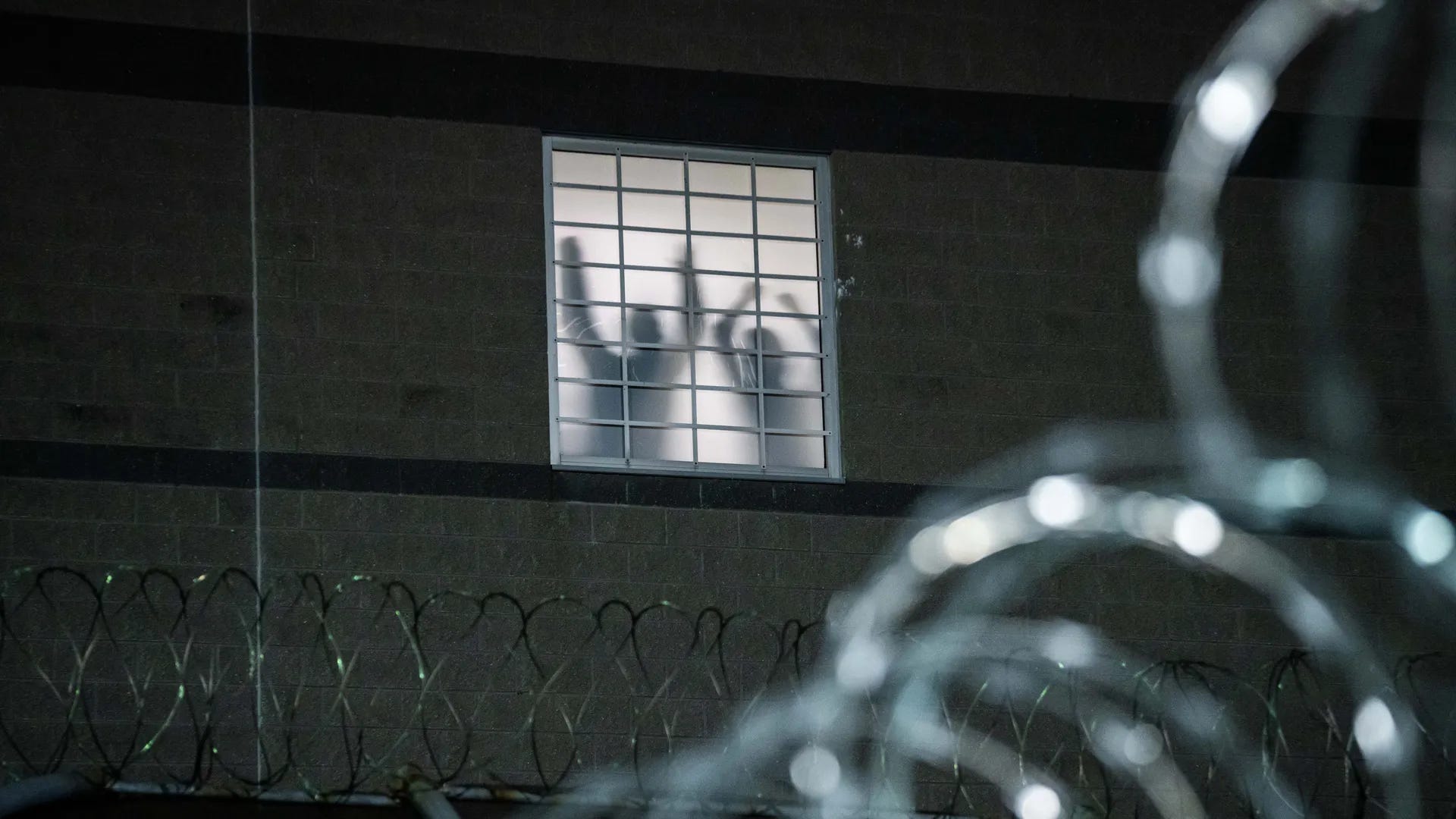
For weeks, I have been covering Delaney Hall. I have stood outside the gates, watched the protests grow, and listened to families, organizers, and lawmakers talk about what is happening inside this prison. But hearing from them is one thing. Hearing directly from someone who was trapped inside is something else.
That is why I wanted to speak with Henrique, a Portuguese man who was raised in the U.S. and trapped inside Delaney Hall for months while his family waited for him to return. Henrique reached out to me on Instagram to let me know he wanted to share his story. He sent me a photo of his detainee ID as proof that he had been held inside the prison I had only ever seen from the outside. We jumped on a phone call last week, and he told me his story.

Henrique was brought to the United States when he was only 2 years old. “Why does anybody come to the U.S.? They wanted the American dream,” he told me about his parents’ decision to come here with a small child. They knew it would be hard to start over in a new country, but they wanted to give their children a chance to build a better life. And Henrique did build a life here. He worked as a plumber while dabbling in real estate. His DACA application has been pending for years, since he was 15, he told me. But he kept living despite that setback. He fell in love and married his wife. They had a baby they were raising in the U.S. And then one day, ICE took him away.
Henrique told me he was on his way to work with two other men when agents stopped the van.
“It was like a little, a Camry, a big, um, Chevy, and then I forget what those are called, a Ford or something like that. No sirens or nothing,” he remembered. Agents sped up to catch the van and then approached their vehicle asking questions. “They asked us for documentation,” he told me. Henrique was translating for the other two men.
I noticed on the phone that Henrique has an American accent, and these agents probably did not think he was an immigrant. “They asked me why my English was so good … I told them, I’ve been in America for a very long time.”
“Eventually they asked for some ID. I didn’t want to give it up because I was a passenger. But, well, what would I look like, not giving up my ID when I have two close friends next to me, that are in the same situation as me, or what would I look like running away or something like that? So, I gave up my ID.”
From there, he said, the three men were taken into ICE custody, fingerprinted, and held for hours before being sent to Delaney Hall. He said he spent the first part of the day in a holding area, then sat on benches in a caged room, then waited hours more before finally getting a room. It was 7 a.m. when they were taken into custody, he said, and the process did not end until around 4 a.m.
Henrique told me that he and his family tried to get his DACA application approved, “but Trump took that away,” he said. Henrique’s younger brother has DACA and his sister was born in the U.S., but he did not think a piece of paper would land him inside a cell. “I had put in all documentation that was needed to, you know, take care of my papers and, you know, it just wasn’t enough. Me being married wasn’t enough. Me having a daughter wasn’t enough. I was there from December 11th, 2025 to February 21st of 2026.”
“I was in room 313,” he remembered.
Henrique described Delaney Hall as a place built to wear people down.
There is currently a hunger strike going on inside Delaney Hall, but Henrique said detainees are regularly starving themselves to avoid getting sick.
“It’s just like how you see everybody else talking. You have moldy food, frozen food. I remember times, we would go downstairs for breakfast or lunch, and I wouldn’t touch the food because I knew what was going on. You would poke the beans and it would be frozen. It was the funniest thing … they had this juice as well, and then the water that they called ‘penis killer juice.’ I don’t know if you guys are all aware of that, but they taint the food, they taint the water. It’s all a setup to, to make you weak.”
I asked him to clarify why detainees were calling the juice they were served “penis killer juice.” He told me, “You drink it and you wake up not how you’re supposed to.” Other detainees have said that this mysterious drink would make them weak and sleepy.
He said most detainees survived by buying commissary, and even that was expensive. He kept his own diet simple: tuna, crackers, and peanuts. Detainees who had been held for a long time would warn new people to avoid the food they were served.
The place was depressing, he told me. People slept throughout the day. They waited around, wasting away. And when people talked, they talked mostly about their families and their court dates.
“It’s very, it’s a very sad place .. I used to take like 4 naps a day.”
Henrique said mistreatment from staff at Delaney was common. Some officers, he said, were especially cruel. They regularly used racial slurs when talking to detainees and would yell at them even when they were not doing anything wrong. They would even throw away food and force people to sleep without blankets.
“Every single week they would check my room, it was the smallest room. We had 6 people. They would strip everything. They would check our clothes, throw away our clothes. If we had food, they would throw it away. They would laugh at us and throw our food away in our faces. Like it was … it was things that you don’t do to people,” Henrique said, sounding frustrated as he described what he went through.
“So if you had an apple, and you don’t want to eat it right then and there, you’re gonna save it for later. But they would take it away. Blankets they would take away from us. We couldn’t have a pillow. I had nights where I literally did not have a blanket at all.”
Other guards, he said, knew some of the people inside personally and felt sorry for them. Some staff members inside Delaney Hall were related to detainees, and others knew each other from high school or sports teams.
“They went to high school with them. They knew their business, they knew this and that. They were the ones, you know, you were able to kind of talk normally with them because they were around our age group.”
“There was even some that their family was even in there. And they were still working there. And you wind up talking to them because, their families are immigrants. They’re like, ‘no, we wouldn’t want this to happen.’ So I say, ‘why, what are you doing working here?’ Or someone had a brother locked up as well.”
Henrique said he was sick the whole time he was there. He suffered an infection, but like members of Congress have reported after their visits, there was no real medical care given to people inside Delaney Hall. They were given expired medication, wrong medication, or no medication at all, sometimes. Henrique pushed back during medical checkups because he knew the place was trying to weaken people or play with their heads. Nurses and staff would say things like, “I don’t know how I would feel if my son got locked up,” and he would tell them that was hypocritical while they were helping run the place.
Henrique tried to remain strong by keeping up with his workout routine. “I’m a fighter,” he told me, growing up as a boxer. He even trained with one of the guards who was keeping him inside this prison. “He trained me. I trained with his kid and then I wound up finding him in there as well.” One day, though, a guard told Henrique he had to stop working out. When he demanded a reason, the guards told him it looked like he was getting ready to attack them. “They want us to be weak.”
Delaney Hall, he told me, was like a revolving door of people coming and going. “Almost every week, 200 people come in and 200 people come out. At least that’s what was happening when I was in there. We would see people leave every single day. They would wake people up at 4 in the morning. ‘Hey, your plane’s waiting for you.’ And then some people would try to fight … But they would still take them.”
He explained the tricks ICE agents would use to break people down and force them to sign their own deportation papers. It was like mental torture.
“This one guy from the Dominican Republic. He ended up signing his voluntary. They drove him around. They drove around for hours and hours and hours, sent him to another facility and then they brought him back to Delaney Hall when he signed his papers.” Agents used the threat of being transferred to another facility to pressure someone to agree to be deported before they had the opportunity to speak to a judge or fight for a chance to stay in the U.S.
What kept Henrique going was his family.
He could see his daughter and his wife on video calls. He read the Bible and prayed every day. He said that was the only way to keep his mind right in a place that was trying to break everybody down.
Because people talk about Delaney Hall like it is just a detention center. But what Henrique described was even more than a for-profit private prison. It is a place where human beings are subjected to abuse that will haunt them for years to come.
Henrique filed several requests for a court date. ICE told him at one point he would not even get one. Then, after weeks of requests, he finally got his day in court. It still did not save him. He said the paperwork they gave him was wrong, the hearing was rushed, and the judge treated him like he was disposable. In the end, he was denied bond and deported back to Portugal.
After months of isolation and neglect, Henrique was reunited with his wife and daughter, who moved to Portugal to be with him.
I asked Henrique what people should know about the men and women inside Delaney Hall. “We were not criminals,” he said. “We are normal people. People with families.”
He said most of the men he knew were workers, fathers, husbands, people just trying to keep their lives together. Some had overstayed a visa. Some had old driving tickets. But that did not make them bad people, and none of them deserved to be trapped in a place like Delaney Hall.
This is a story of concentration camps.
The penis killing juice really made me look.
What are they giving the women?
Are women being sterilized?
What about the little girls and teenagers. Are they being trafficked?
God this is awful. It's an entirely new level and type of inhumanity happening in America, in NJ not far from one of the most important cities in the world.